Cybernetic Amusement: Disneyland, Simulation, and the Logic of Automation
Roland Betancourt
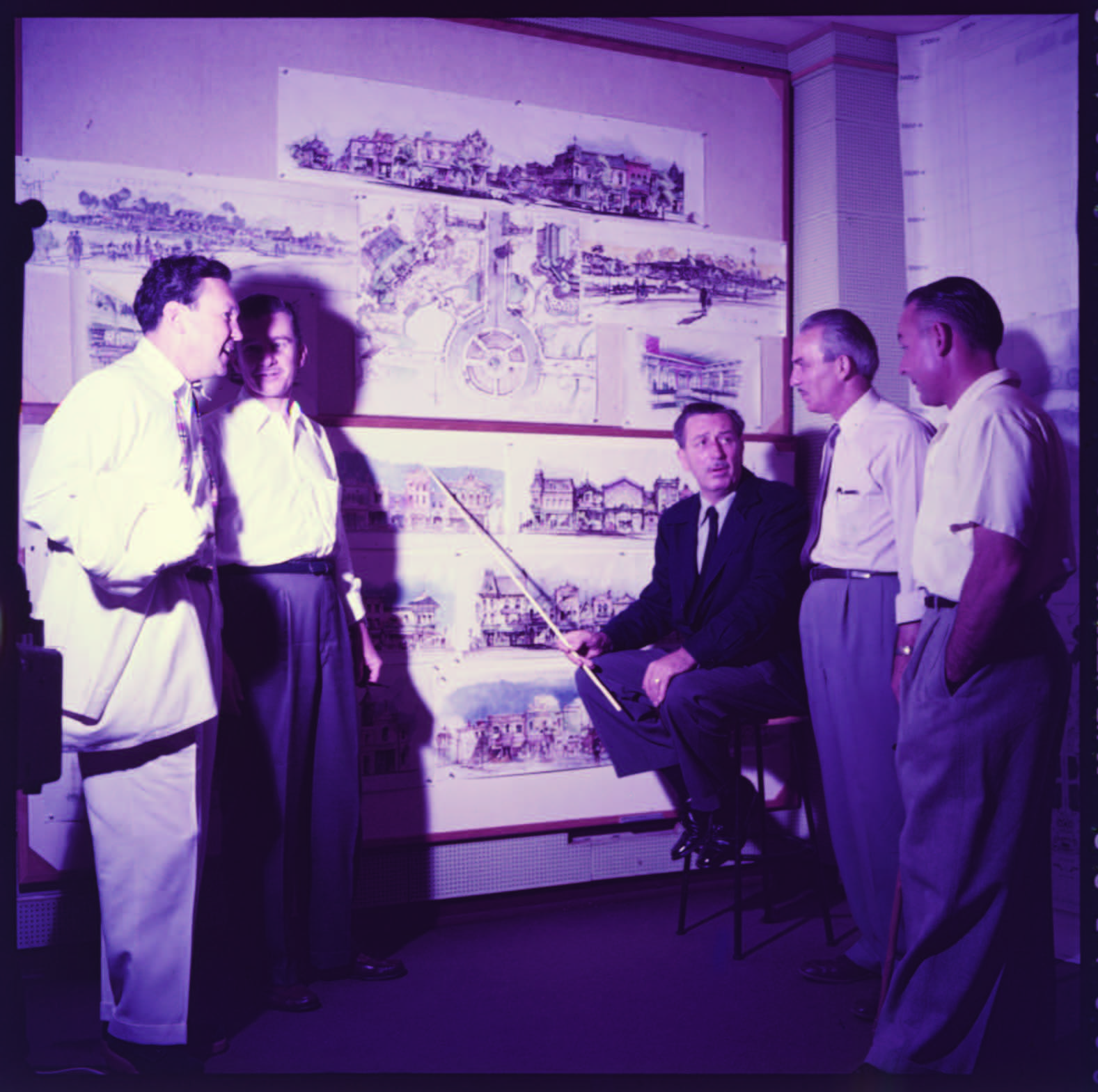
Walt Disney and designers discussing drawings of Disneyland. Photographed by Earl Theisen for Look, accessioned on July 26, 1954. Photo courtesy of Look Magazine Photograph Collection, Library of Congress.
Roland Betancourt, “Cybernetic Amusement: Disneyland, Simulation, and the Logic of Automation,” Grey Room, no. 103 (Spring 2026: 36–69.
Through extensive archival research, this article documents these developments and demonstrates how they were executed, going on to argue that we must consequently view Disneyland itself as model and simulation. Moving beyond Jean Baudrillard’s postmodern critique of Disneyland as simulacra, I will argue for a historically situated understanding of simulation that emerges out of postwar cybernetics. I propose that Disneyland was conceived of as an analog simulation through which Walt Disney Productions was able to assess, predict, and model in real-time the practices and behaviors of consumers in the world beyond the amusement park’s bounds.