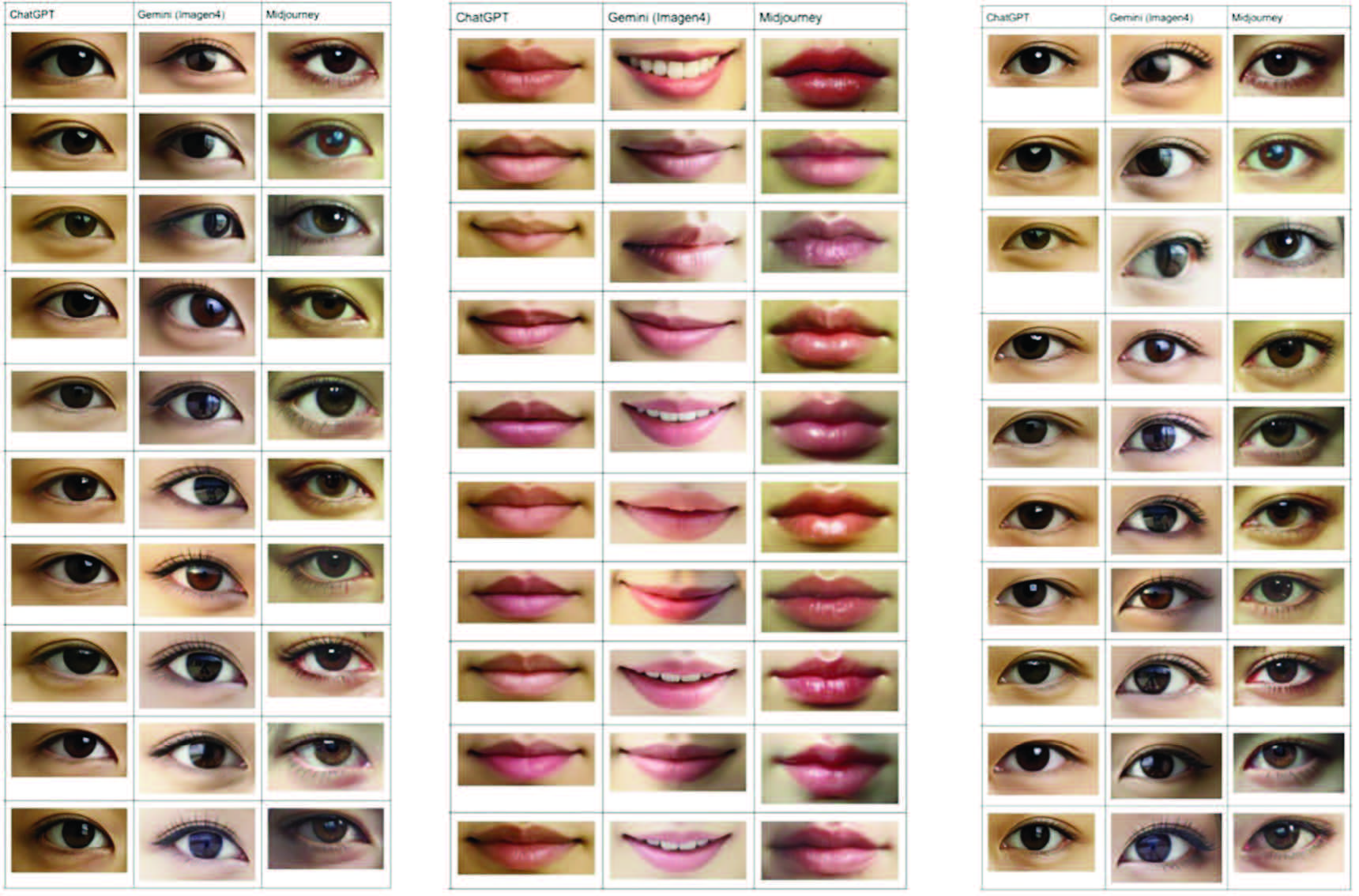
The Chinese internet is not the same as other internets, or so we are often told. Google, Facebook, YouTube, and X are all blocked, making for a palpably different online world, and in the absence of these behemoths local tech companies have filled the space with an energetic ecology of homegrown platforms. At the core of this ecology are China’s distinctive cultures of celebrity and, in particular, the web of influencer-driven marketing via social media that shapes the Chinese digital economy and is emblematized by the term wanghong. This term literally means “net red,” or “hot online,” and refers in large part to the sway and seductive power of influencers, the mostly female internet celebrities who function as the lightning rod converting sexualized user attention into hard platform profit. At the core of their erotic capital is a highly bespoke look, a facial template that had become so entrenched by the late 2010s that it generated its own moniker: wanghonglian, which loosely translates as “Internet celebrity face.” Internet celebrity face soon achieved close to full saturation on China’s money-spinning livestreaming platforms, whose audiences are predominantly male: as Yang Yidan notes, “93%, 96%, and 87% respectively of the 100 top-rated female hosts who get the most clicks have ‘Internet celebrity face.‘“2 The look is prevalent on the streets of urban China, too. Costly surgical procedures and cheap digital face-editing apps have made wanghong aesthetics attainable for any body or budget.
[…]